Lyngbya control
Aug 6 2015
Front page story leaks
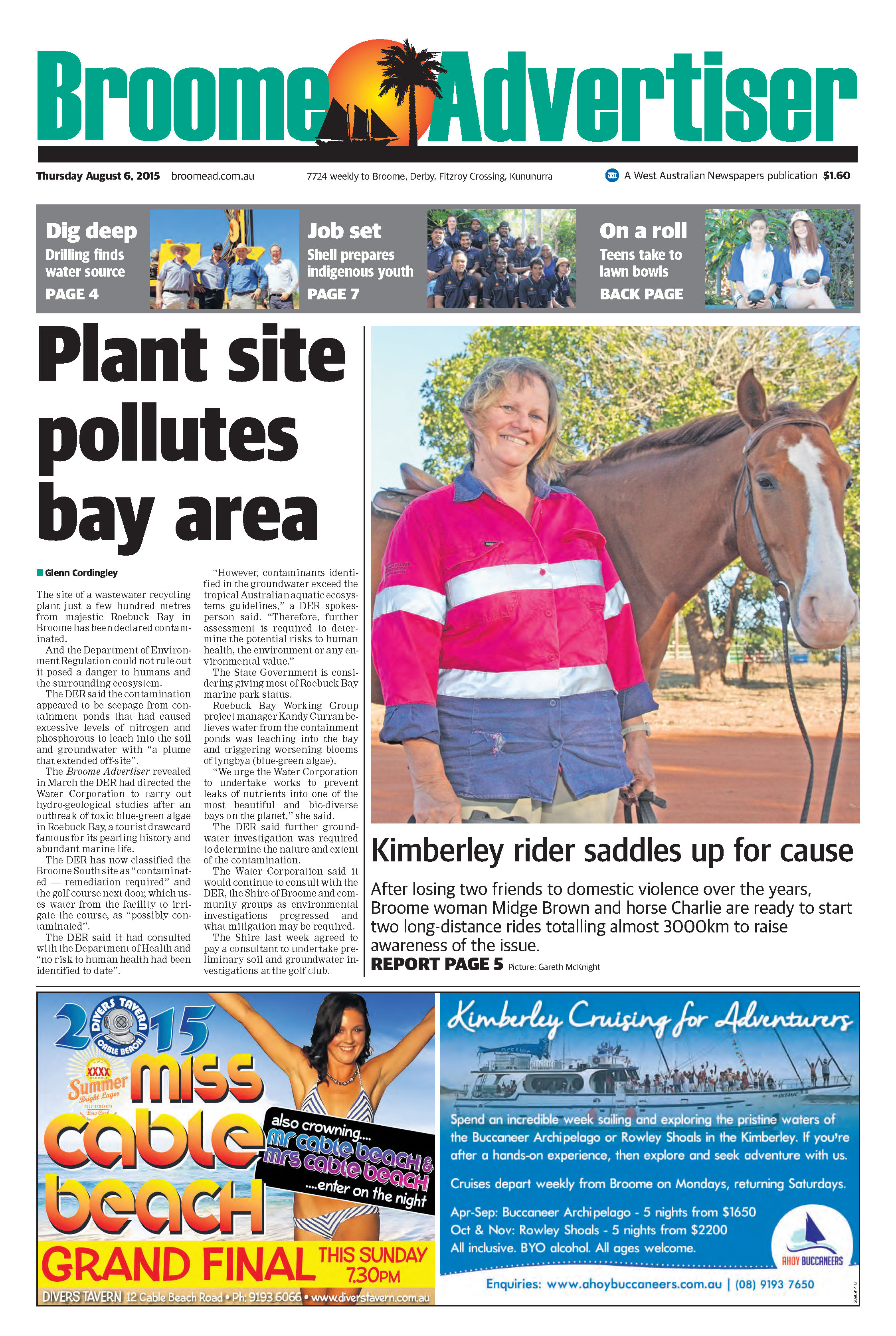 “Plant site pollutes bay area” is the front page story in this week’s Broome Advertiser. The Roebuck Bay Working Group is urging Water Corp to undertake works to prevent leaks of nutrients into Roebuck Bay, one of the most beautiful and biodiverse bays on the planet.
Jun 30 2015
Keep your doings out of Roebuck Bay!
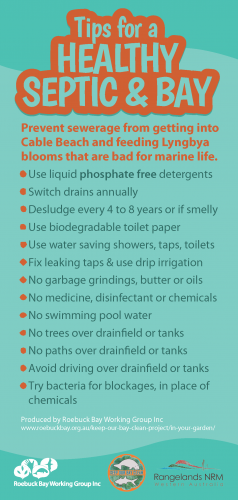
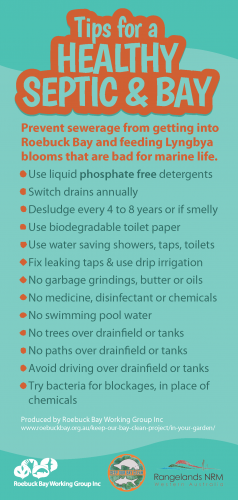 Surprised that your septic, if not maintained well, can pollute Broome’s coastal waters and provide nutrients for blooms of toxic Lyngbya? Follow the tips on the magnets below to prevent sewerage from your septic seeping into the aquifer below Broome, or overflowing and entering stormwater drains that discharge into Roebuck Bay. Sewerage can become food for toxic blooms of Lyngbya majuscula that impact seagrass, fish, dugongs and marine life. These blooms pose a threat to human health and to Roebuck Bay’s fish stocks and marine life. One magnet is for residents living close to Roebuck Bay, the other, for people close to Cable Beach. You probably already have one 🙂
Apr 3 2015
Call for upgrade of wastewater ponds
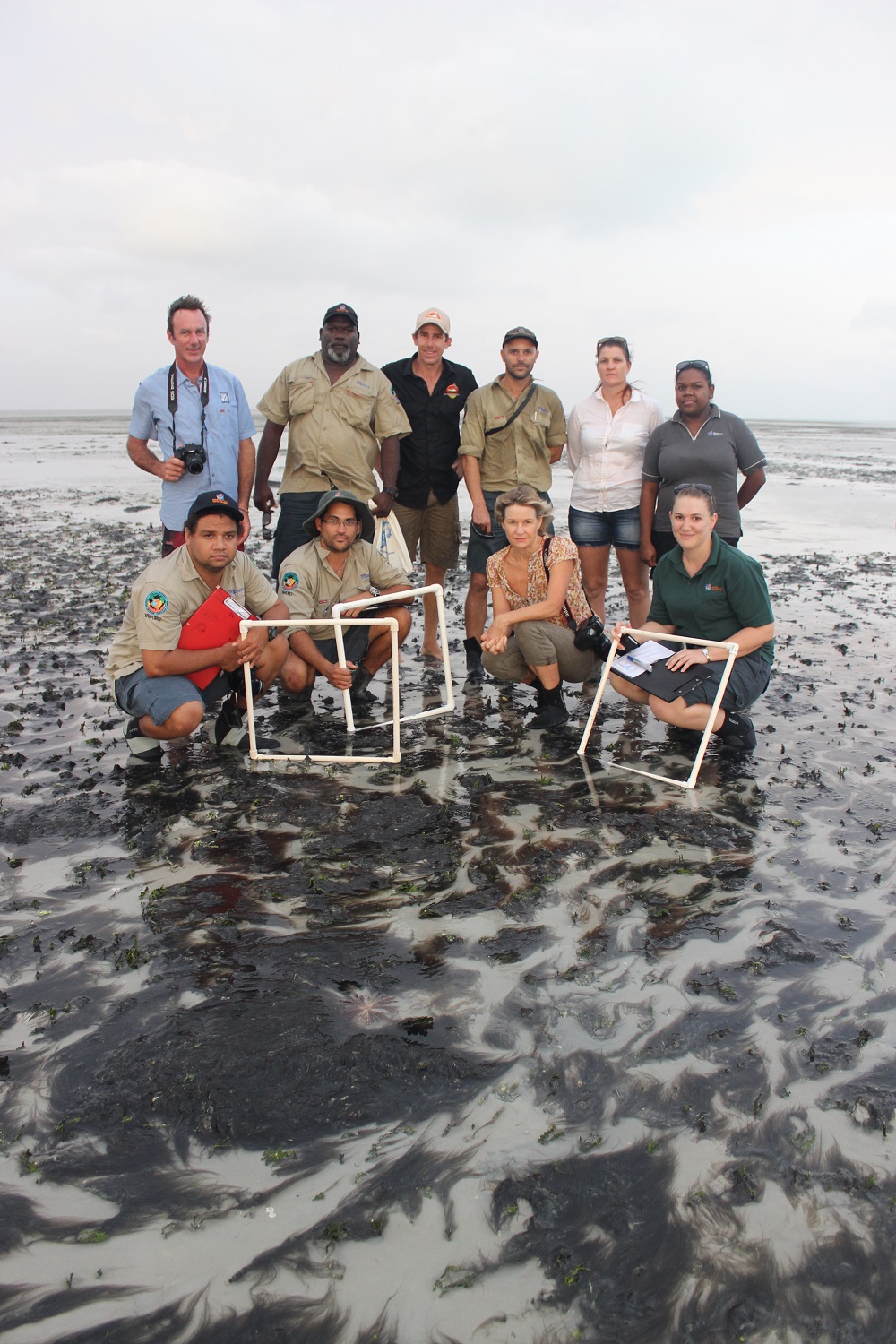
A large Lyngbya bloom over the seagrass meadows between the Port and Dampier Creek prompted a collaborative response from agenices and RBWG.
A severe bloom of toxic blue-green algae has again appeared in Roebuck Bay, with the blooms triggered by nutrients, particularly nitrogen, entering Roebuck Bay. Nutrients come from multiple sources in Broome. Studies undertaken by the University of WA show that a source of nutrients entering Roebuck Bay is the ponds at Broome South Wastewater Treatment Plant, and wastewater re-use on Broome golf course.
Water Corp findings in February 2014 showed that 91000KL of semi-treated wastewater per year was seeping from the Broome South Wastewater Treatment Plant. The plant is adjacent to Town Beach/Simpson Beach, where the thickest Lyngbya blooms are occurring.
Kandy Curran, Project Manager of the Roebuck Bay Working Group Inc (RBWG), said: ‘Every effort must be made to prevent pollution from entering Ramsar and National Heritage listed Roebuck Bay. Lyngbya blooms are devastating to seagrass, the main food of marine animals including turtles and dugong. The RBWG have written to Water Corp, Department of Environment Regulation, and the State.
Jun 10 2014
Food for Lyngbya blooms

Most of Broome’s stormwater drains discharge into Roebuck Bay, so better to grow native plants that dont need fertilser that can feed blooms of Lyngbya.
Read about the practical research underway to explain why Roebuck Bay has been experiencing Lyngbya blooms, and what can be done about it. Great work scientists Gayan Gunaratne, Assoc Prof Ryan Vogwill, Nick Wright and Daniel Hearn and Yawuru Rangers, Roebuck Bay Working Group and Rangelands NRM for providing funding support.
Here is the link to the feature on Science Network WA »
Nov 11 2013
Award Winning Lyngbya Research
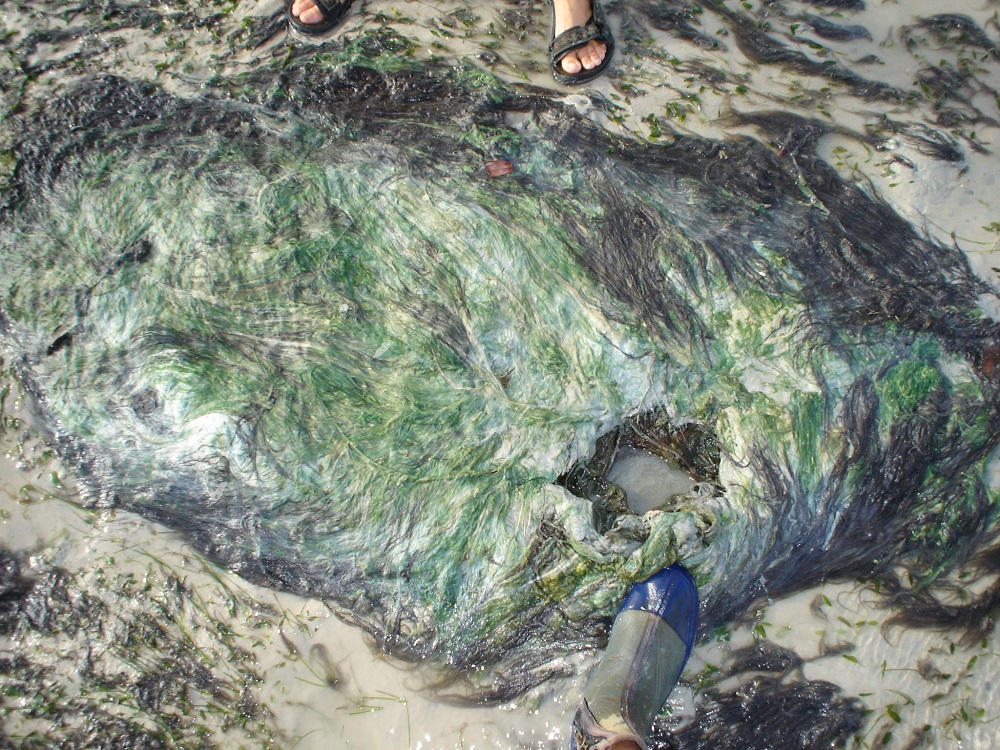
Lyngbya is a cyanobacteria that grows quickly when fed nutrients that can come from wastewater, fertilisers, animal faecies and garden waste.
A team of scientists headed by Assoc Professor Ryan Vogwill at the University of Western Australia have won an outstanding award. They have been working with the Department of Parks Wildlife staff in Broome, Yawuru Rangers, RBWG and volunteers from Broome community to help us understand why Lyngbya blooms have been occurring in Roebuck Bay in recent years.
The Broome Lyngbya Taskforce won the award for ‘bringing together the community to discover the role of nutrient inputs in the proliferation of noxious algae in Roebuck Bay’.
Oct 21 2013
RBWG Wins State Environment Award
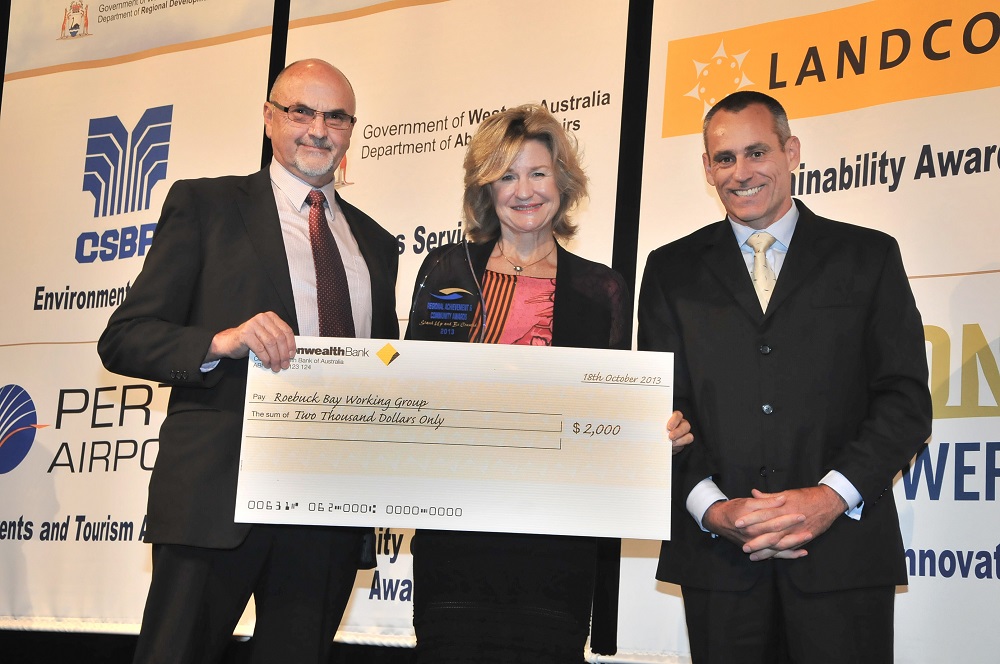
Grant Pearson and Kandy Curran from the RBWG accept an Environment Award in the 2013 WA Regional from Trevor Naughton of CSBP.
The Roebuck Bay Working Group has won the 2013 Environment Award in the Regional Achievement and Community Awards for innovative work to reduce blooms of Lyngbya and develop community based management plans for Roebuck Bay. Lyngbya has been worsening in recent years with impacts on the seagrass meadows and the biodiversity of Roebuck Bay.
The RBWG formed in 2004 and is currently funded by Rangelands NRM, with smaller projects sponsored by Inspiring Australia and National Science Week. The group’s outstanding community work is aimed at protecting, restoring and maintaining the highly biodiverse catchment that is one Australia’s most important migratory shorebird sites and is a hotspot for Australian snubfin dolphins. The RBWG is currently working with agencies, industry and the community to reduce nutrient enriched run-off from the townsite that can feed blooms of Lyngbya.
Other key activities have been lobbying for a Roebuck Bay National Heritage site (declared in 2012), lobbying to divert helicopter flight paths to reduce disturbance of migratory shorebirds, removal of 350 cubic metres of rubbish from the northern shores and raising community, industry and government awareness of the impact of nutrient run-off into Roebuck Bay and providing practical solutions.
Sep 5 2013
Coastal Garden Trend
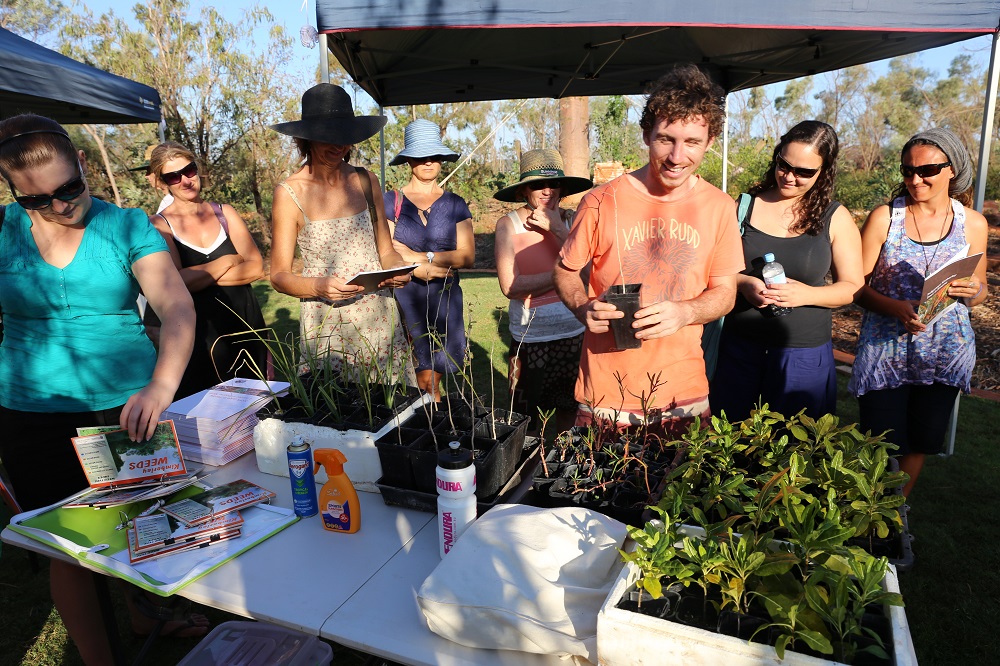
Growing native plants and trapping rainwater in your garden plays a big part in keeping coastal waters and fish stocks healthy. © Kandy Curran
With Broome on a peninsula surrounded by extraordinarily productive waters, it is essential the community uses a coastal gardening approach to reduce polluted runoff impacting marine life and feeding blooms of toxic Lyngbya. It is also important to help restrict erosion and replenish the aquifer by building up swales. Read the story here »
With water quality data collected by post doctorate researcher Dr Estrella (three years) indicating nutrient levels in Roebuck Bay exceed water quality guidelines, the best approach for the community is to plant natives and trap rainwater. Native plants don’t require fertiliser and most survive on far less water than introduced plants, so are ideal for the coastal town of Broome.
Aug 28 2013
Natives “growing” trend
Growing native plants and trapping rainwater in your garden plays a big part in keeping coastal waters and fish stocks healthy. © Kandy Curran
Magabala Botanical Park drew a happy crowd on Sunday August 25, with Tom Harley showing the Kimberley flora in Broome North. There were smiles everywhere with free native plants and books written by the Society for Kimberley Indigenous Plants and Animals (SKIPA) on Growing a Native Garden in Broome. Roebuck Bay Working Group, SKIPAS and LandCorp are quietly optimistic that gardening with natives is a ‘growing’ trend, resulting in clean and healthy coastal waters without blooms of Lyngbya.
Thanks National Science Week for funding this great community event and Hilary Wilkins (LandCorp), Michelle Teoh (SKIPA) and Grey Mackay (RBWG Chair) for helping to make the event so successful.
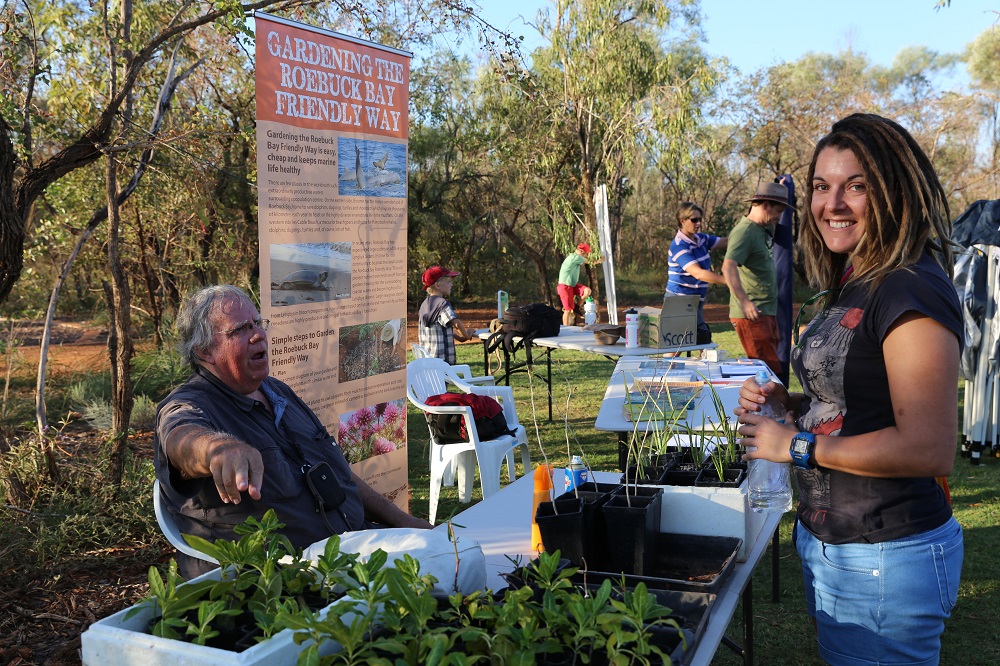
Bonnie Tregenza, DPaW’s new Yawuru Communications Office, enjoyed meeting Tom Harley too. © Kandy Curran
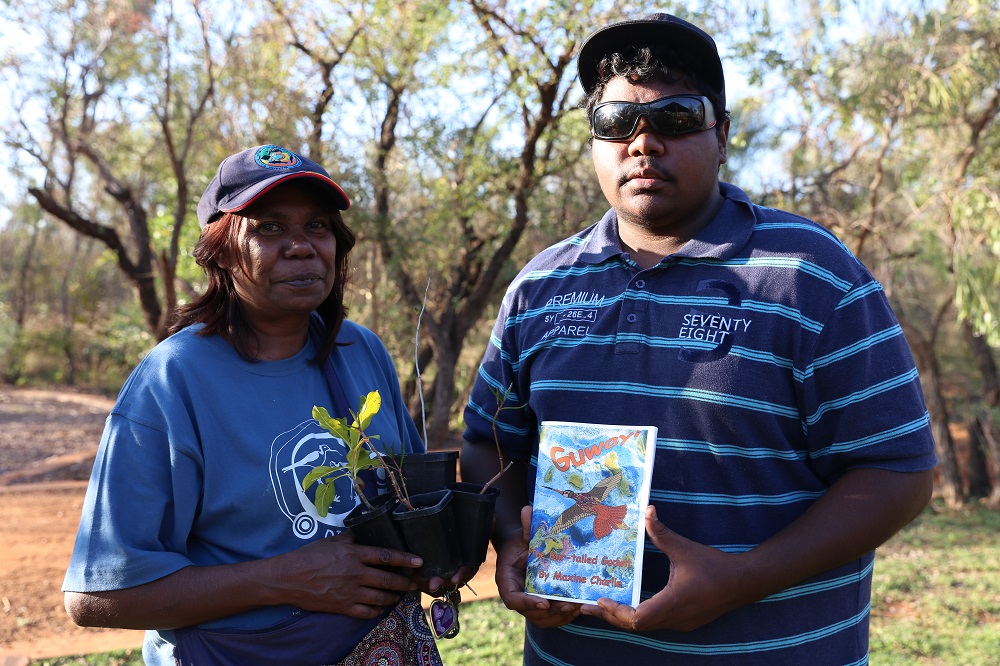
Maxine Charlie, author of Guwayi The Bar-tailed Godwit gave a great Welcome to Country and her son Dannon was there to enjoy the day too. © Kandy Curran
Jul 23 2013
Coast Haven for Dolphins
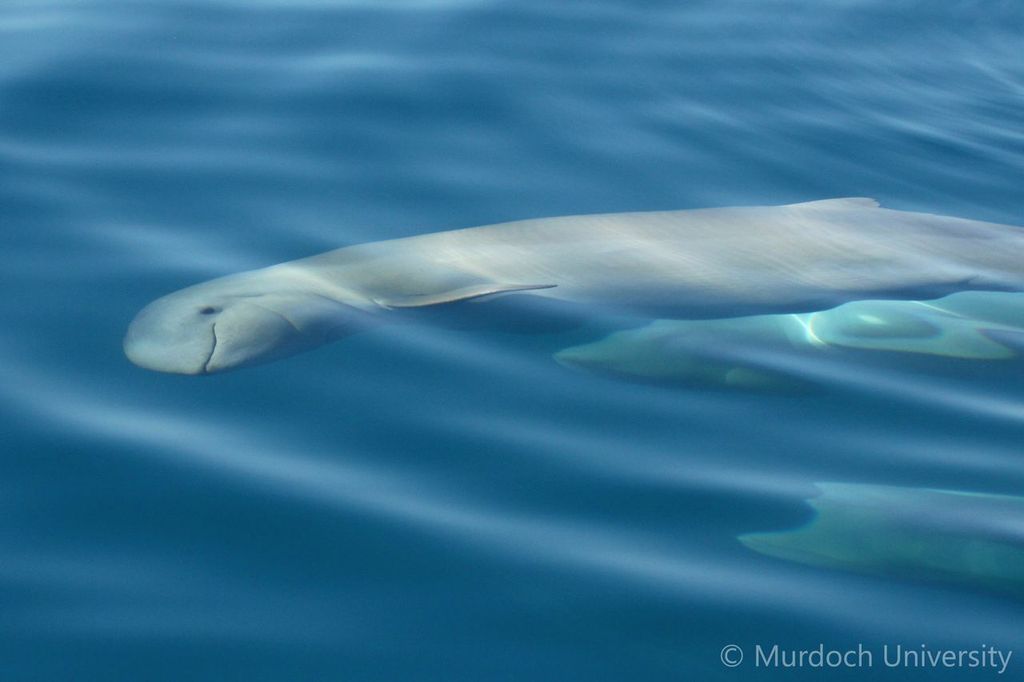
Roebuck Bay and Cygnet Bay in the West Kimberley have populations of three species: snubfin, humpback and Indo-Pacific bottlenose dolphins. © Jenny Smith
ALMOST everyone has a unique dolphin story to regale if they spend time on the coast of the Dampier Peninsula where inshore dolphins regularly cavort.
However until recently, there has been little research to identify the species, numbers and biology of inshore dolphins that inhabit the Kimberley coast. Moreover, whether they are at risk from water pollution. Read the story on Science Network WA »
Jun 20 2013
Tips for Happy, Healthy Dolphins
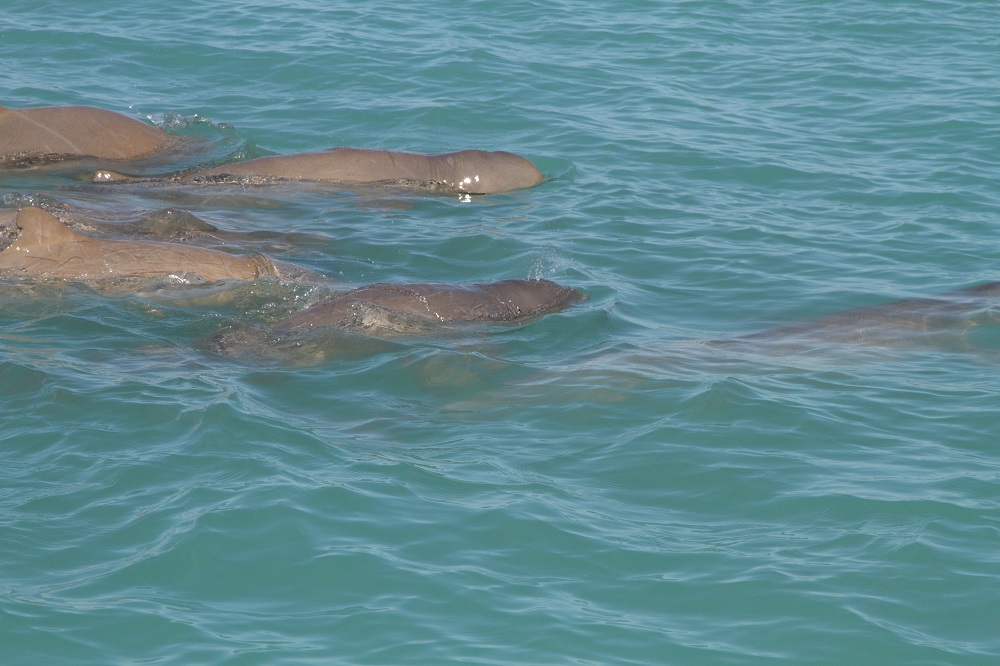
Keep Roebuck Bay’s marine life happy by reducing use of fertilisers, washing cars on lawn with low phosphorous detergent, to stop polluted runoff into the stormwater drains and bay. © Dr Deb Thiele
Have ever washed your car on the road, put lots of fertiliser on your lawn without reading the directions, or back-flushed your pool water down the stormwater drains on Broome’s roads? Well if you want healthy happy dolphins, dugongs, salmon and marine life, then its time you got hold of a Fridge Magnet with tips to keep Roebuck Bay free of Lyngbya blooms , a Wash Your Car the Roebuck Bay Friendly Way flyer and a Fertilise Wise flyer. Our award winning group is happy to send them to you free of charge, so send us an email and we will gladly mail you some goodies. info@roebuckbay.org.au
« Previous Entries Next Entries »